 mrsaynothing.dev
GGUF quantization levels, weighed live: Q4_K_M vs Q8_0 on size, VRAM and quality
Every rung from Q2_K to Q8_0 on one console — pick a level, dial your parameter count, and the size answers from one line of arithmetic.
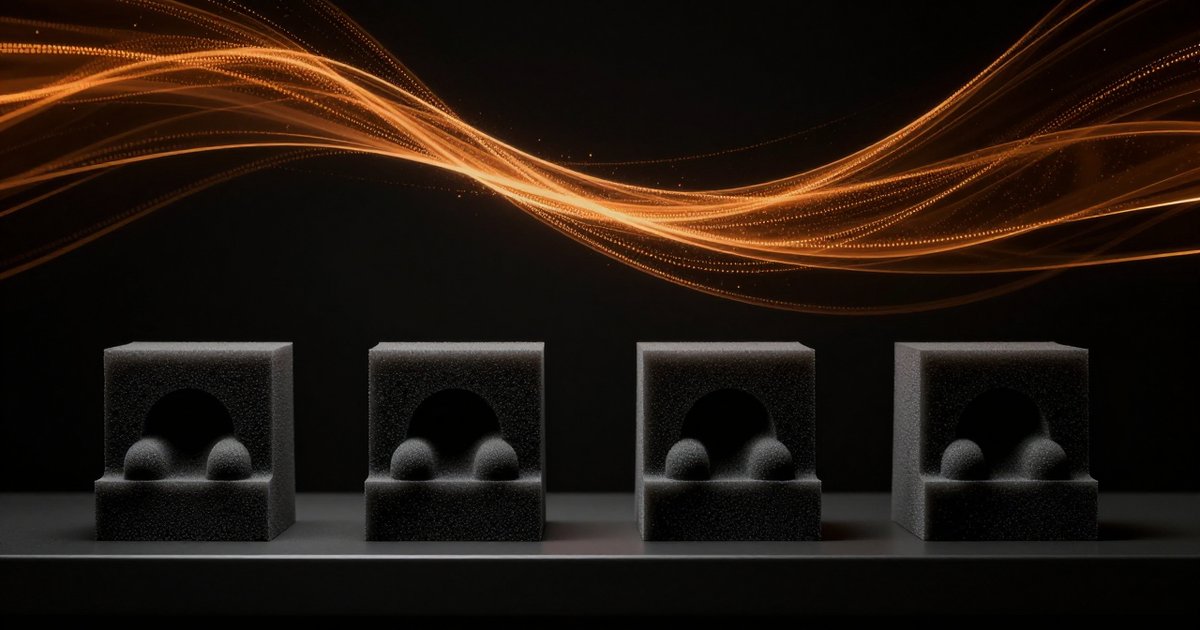
■ space · the block press · fig 1
Default Q4_K_M — ~4.85 bits per weight, ~1% perplexity cost, ~30% of the full-precision size.
Step up to Q6_K for code and math; keep Q8_0 for reference runs; below Q4 is an emergency ration for large models.
The whole decision is one line: size_GB ≈ bits_per_weight × params / 8.
01THE PRESS
one crate, four stamps — the weighbridge answers size, the gauge answers cost
~1% perplexity — THE defaultThe default. Best quality-per-gigabyte trade there is.
RUNG Q4_K_M · 4.85 BPW · SCALE 4.85 GB / FP16 16.0 GB · SIZE 30% · PARAMS 8B
the crate is the model: same weights every pass — only the stamp changes. Press 5 and watch the cost gauge dive
02THE WHOLE LADDER
the machine carries four rungs — the registry ships eight
| rung | bpw | quality — the verdict | reach for it |
|---|---|---|---|
| Q2_K the ration | ~3.4 | severe on sub-13B — an emergency rationcoherence starts falling apart on small models | Nothing else fits, large models only. Test before trusting. |
| Q3_K_M the squeeze | ~3.9 | noticeable — the VRAM squeezenoticeable loss — only for tight VRAM on ≥14B | Tight VRAM, ≥14B models only. |
| Q4_K_S the fallback | ~4.6 | small losssmall loss — when Q4_K_M won't fit and it's close | The fallback when Q4_K_M won't fit and it's close. |
| IQ4_XS the i-quant | ~4.3 | ≈ Q4_K_M — the codebook squeeze≈ Q4_K_M quality, smaller — if your backend runs i-quants | Q4_K_M slightly too big, backend supports i-quants. Slightly slower on some backends. |
| Q4_K_M the default | ~4.85 | ~1% perplexity — THE defaultbest quality-per-gigabyte — every registry ships it | The default. Best quality-per-gigabyte trade there is. |
| Q5_K_M the headroom | ~5.7 | ~0.5% perplexitynear-nil loss, still comfortable | Headroom with comfort — quality mattered more than the last gigabyte. |
| Q6_K the workhorse | ~6.6 | near-indistinguishablenear-indistinguishable — the code & math rung | Code, math, extraction — anything that punishes noise. |
| Q8_0 the reference | ~8.5 | effectively none (~0.02% vs full)effectively none (~0.02%) — A/Bs and fine-tune bases | Reference runs, A/Bs, fine-tune bases — not a daily driver. |
size_GB ≈ bits_per_weight × params / 8 — every readout on the press computes it liveQ4_K_M.gguf over sharded splits unless only the latter ships. Headed for vLLM instead of llama.cpp? Its GGUF plugin takes the same files — GPU-only rule applies. Either way the engine is a separate axis from the quant.03WHAT THE STAMP REMOVES
the crate shrinks — here is what the stamp actually does to the bits
A Q4 file and a Q8 file of the same model are the same model, wearing different coats.
04THE DECISION ORDER
the mechanism is honest — so which rung holds which job
- Context + KV budget first, weights second. Context you can't fit is worse than quality you can't measure — at long context the cache can outweigh the model.
- Default to Q4_K_M. ~1% perplexity for ~30% of the size; the community default for a reason.
- Step up to Q6_K when the task punishes noise — code, math, extraction, anything unattended.
- Q8_0 for reference only — A/B tests, damage measurement, fine-tune bases. As a daily driver it buys warm VRAM sensors.
- Below Q4 only under duress, large models only — and test with a known-hard prompt before trusting it.
05MEASURE THE DAMAGE YOURSELF
the dials read llama.cpp's verdicts — make your own hardware vote
git clone https://github.com/ggml-org/llama.cpp && cd llama.cpp
cmake -B build && cmake --build build --config Release -jhuggingface-cli download bartowski/Meta-Llama-3.1-8B-Instruct-GGUF \
Meta-Llama-3.1-8B-Instruct-Q4_K_M.gguf Meta-Llama-3.1-8B-Instruct-Q8_0.gguf \
--local-dir models
# perplexity (lower = closer to the original model)
./build/bin/llama-perplexity -m models/Meta-Llama-3.1-8B-Instruct-Q4_K_M.gguf -ngl 99
./build/bin/llama-perplexity -m models/Meta-Llama-3.1-8B-Instruct-Q8_0.gguf -ngl 99
# and speed on the same hardware
./build/bin/llama-bench -m models/Meta-Llama-3.1-8B-Instruct-Q4_K_M.gguf -ngl 99verify: the Q4_K_M number lands a few hundredths of a point worse — and the file is ~40% smaller. Same data, every rung
Perplexity is next-token surprise on one fixed dataset: a proxy, not a grade — and your real task can disagree with it.
end of the block press · nothing fetched · everything local